Complete Guide to Feline Urinary Health: Prevention to Emergency Care
Feline urinary diseases are complex and can develop progressively. Learn everything from symptom recognition to emergency response to protect your cat's health.
The feline urinary system comprises the kidneys, ureters, bladder, and urethra. A problem in any one component can trigger a cascade of complications. Male cats are particularly vulnerable to uroliths and urinary obstruction due to their narrower urethra. Missing early symptoms can become life-threatening, making it essential to understand prevention through emergency management.
Feline urinary system anatomy
Disease Comparison: FLUTD vs. Urolithiasis vs. Cystitis
| Condition | Primary Cause | Key Symptoms | Urgency |
|---|---|---|---|
| FLUTD (Idiopathic) | Stress, environmental changes, diet (unknown cause 70%) | Frequent urination, difficulty urinating, hematuria, vocalization | High (male obstruction risk) |
| Urolithiasis | High mineral diet, urine pH imbalance, genetics | Hematuria, incomplete voiding, dysuria, abdominal discomfort | Very high (male urethral obstruction) |
| Cystitis | Bacterial infection, immunosuppression, secondary to uroliths | Frequent urination, hematuria, dysuria, fever (if bacterial) | Moderate (increases if infection progresses) |
Five Prevention Strategies for Urinary Health
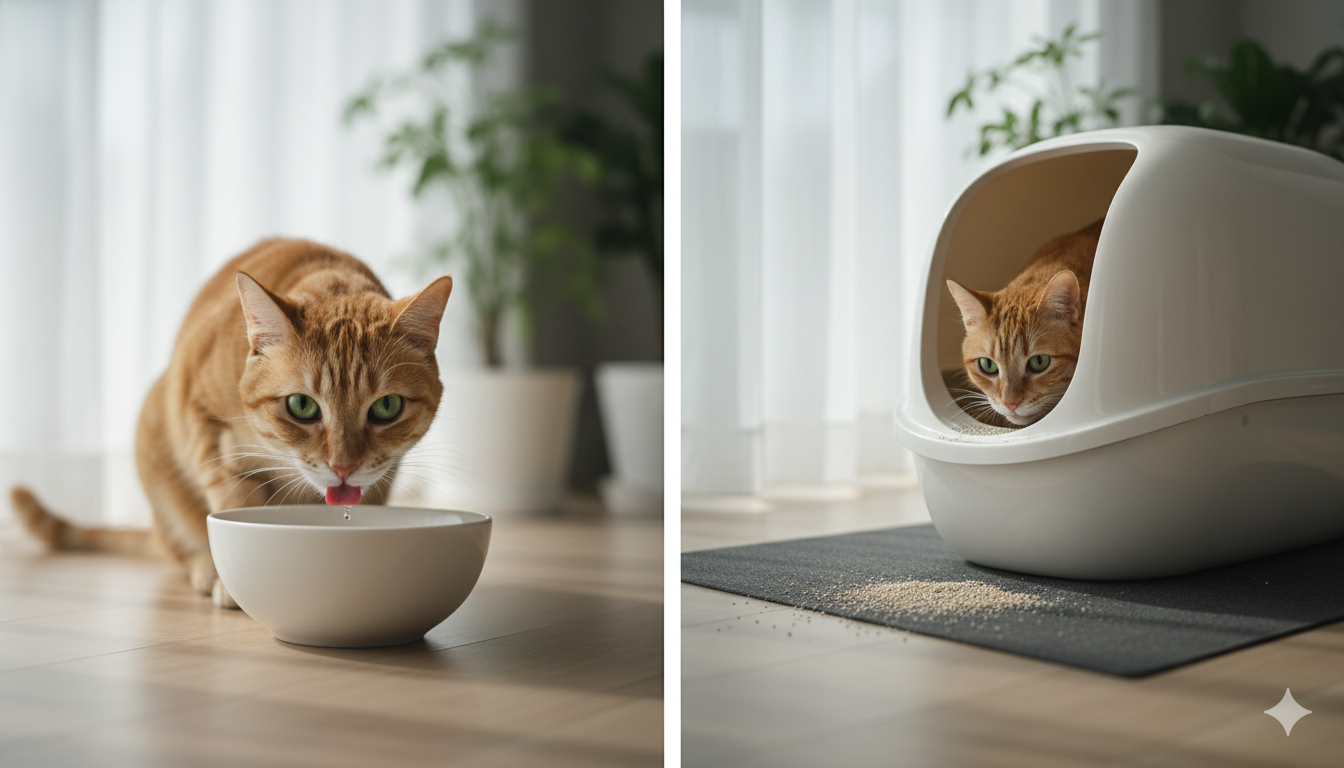
- Adequate hydration: Cats need 40-60ml/kg daily. Insufficient water intake leads to urine concentration and stone formation. Use water fountains and wet food to increase water intake.
- Maintain proper urine pH: Ideal feline urine pH is 6.0-7.0. High mineral content increases stone formation risk. Choose diets meeting AAFCO standards.
- Stress management: Stress is a major FLUTD cause. Provide quiet litter box areas, hiding spots, and regular play for mental stimulation.
- Regular veterinary checkups: Annual urinalysis to detect crystals, pH abnormalities, and protein early.
- Appropriate litter box setup: Number of cats + 1 box rule. Clean and easily accessible locations reduce stress and disease incidence.
Emergency Symptoms: When to Rush to the Vet
General Symptoms (Hematuria, Frequent Urination)
        ↓
Improvement within 48 hours?
  ├─ YES → Schedule vet consultation (not urgent)
  └─ NO → Check for more severe symptoms
           ├─ Unable to urinate (2+ hours) ─→ 🚨 Emergency ER (catheterization needed)
           ├─ Severe abdominal pain, vomiting → 🚨 Emergency ER
           ├─ Lethargy + loss of appetite ───→ 🚨 Emergency ER
           └─ Fever + hematuria + frequency ─→ ⚠️ Vet visit (suspected bacterial infection)
If a male cat cannot urinate for 2+ hours, urethral obstruction is life-threatening and requires immediate emergency care. The AVMA classifies male urethral obstruction as "emergency of emergencies."
Urinary health is as important as any other health system. Regular checkups, proper diet, and stress management ensure your cat's lifelong wellness. Don't hesitate to consult your veterinarian at the first sign of symptoms.