When Your Cat Seems "Off" — Understanding Territorial Behavior & Excessive Grooming
Does your cat repeatedly scratch certain spots or compulsively groom the same area? It may not be simple behavior. Learn to distinguish between behavioral and medical issues.
Cat guardians often miss subtle signals. Statements like "my cat keeps licking the same spot," "scratches walls repeatedly," or "bites at the same area constantly" are easy to overlook. But these repetitive behaviors aren't just "cat things"—they may signal underlying stress, skin problems, or serious medical conditions.
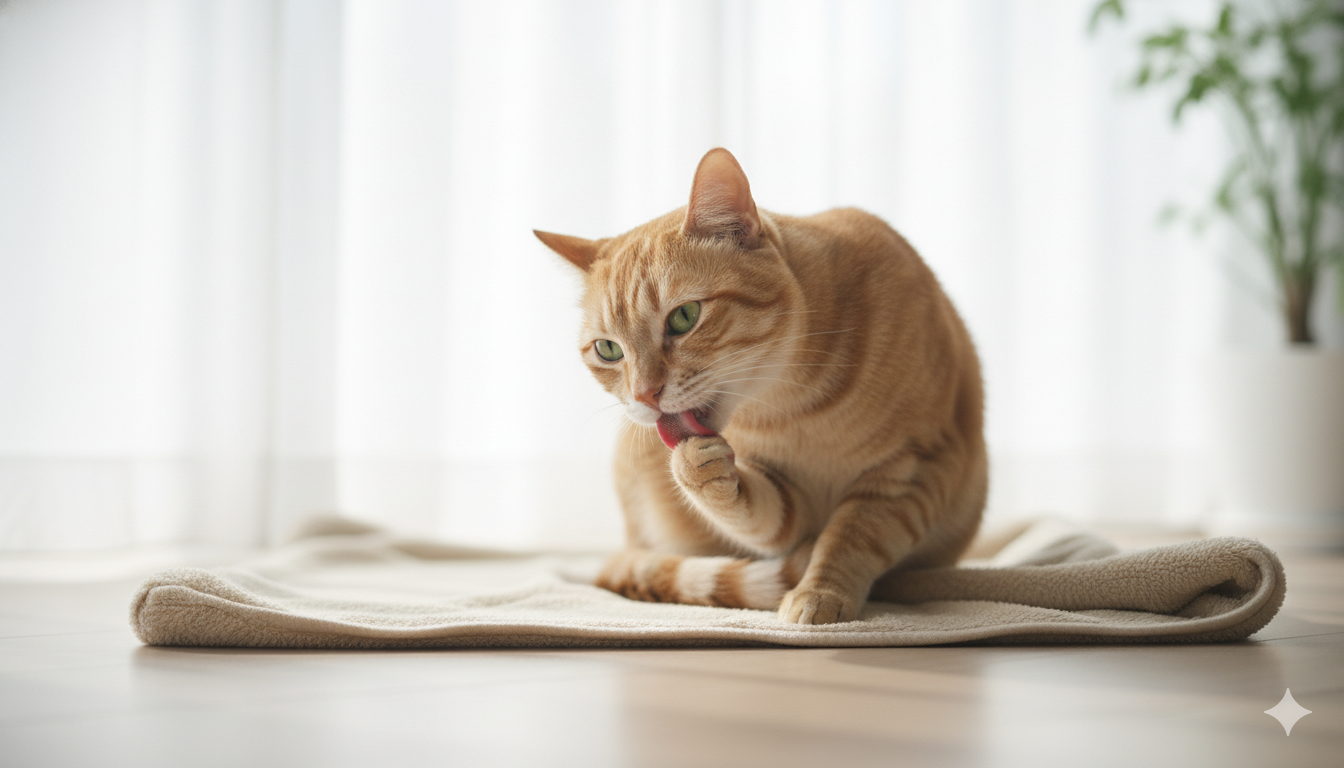
Observing feline behavioral signals
Root Causes: Behavioral vs. Medical Issues
- Behavioral: Stress, anxiety, environmental changes, attention-seeking, new family members/pets, relocation
- Skin disease: Ringworm, dermatitis, mites, fleas—all cause itching
- Allergies: Food or environmental allergies—itching may appear without sneezing
- Emotional self-soothing: Repetitive behavior for comfort (problematic if excessive)
Territorial Marking Behavior — "This is MY house"
When a cat repeatedly scratches or rubs doorways, walls, or furniture edges, it's territorial marking. Cats have scent glands on their paws and face; rubbing these areas leaves an "I own this" signal. According to iCatCare, this is normal behavior, but excessive marking may indicate stress.
Management: Spaying/neutering (if not done), pheromone sprays (Feliway), removing environmental stressors, elevated resting areas, and regular play for mental stimulation.
Excessive Grooming — When to See Your Vet
Normal grooming takes 30-40% of a cat's day. But if your cat obsessively licks specific areas to the point of hair loss and exposed skin, that's excessive. Cornell Feline Health Center calls this "psychogenic alopecia" and identifies it as a sign of medical or psychological issues.
| Indicator | Normal | Excessive (See Vet) |
|---|---|---|
| Grooming Duration | 30-40% of day | 50%+, disrupts sleep |
| Fur Appearance | Shiny, full coat | Hair loss, bald patches |
| Skin | Healthy color, no lesions | Redness, wounds, infection signs |
| Licking Pattern | Even throughout body | Obsessive focus on one area |
| Context | During relaxation | During stress or unpredictable |
Repetitive behaviors in cats are easy to overlook, but your instinct that "something seems off" is often accurate. If behavioral changes persist for 2+ weeks, seek veterinary evaluation. The treatment differs significantly depending on whether the issue is behavioral, dermatological, or stress-related.