How Cortisol Monitoring Reveals Hidden Stress in Cats — And What You Can Do
[Three-Line Summary]
- • Because cats hide stress well, measuring cortisol as a physiological indicator is valuable. Blood cortisol can be artificially elevated by the collection procedure itself, while fecal glucocorticoid metabolites (fGCMs) and hair cortisol better reflect chronic stress.
Because cats hide stress well, measuring cortisol as a physiological indicator is valuable. Blood cortisol can be artificially elevated by the collection procedure itself, while fecal glucocorticoid metabolites (fGCMs) and hair cortisol better reflect chronic stress.
Research Background
고양이는 야생에서 포식자이자 피식자였기 때문에 스트레스와 고통을 숨기는 본능을 갖고 있습니다. 이로 인해 행동 관찰만으로는 고양이의 스트레스 수준을 정확히 평가하기 어렵습니다. 시상하부-뇌하수체-부신(HPA) 축을 통해 분비되는 코르티솔은 스트레스 반응의 객관적 생리 지표로 활용될 수 있습니다.
Research Method
혈청/혈장 코르티솔, 대변 글루코코르티코이드 대사물(fGCMs), 털 코르티솔, 소변·타액 코르티솔 등 다양한 매트릭스에서의 측정 방법을 비교 검토. 각 방법의 민감도, 침습성, 반영 기간을 기준으로 평가.

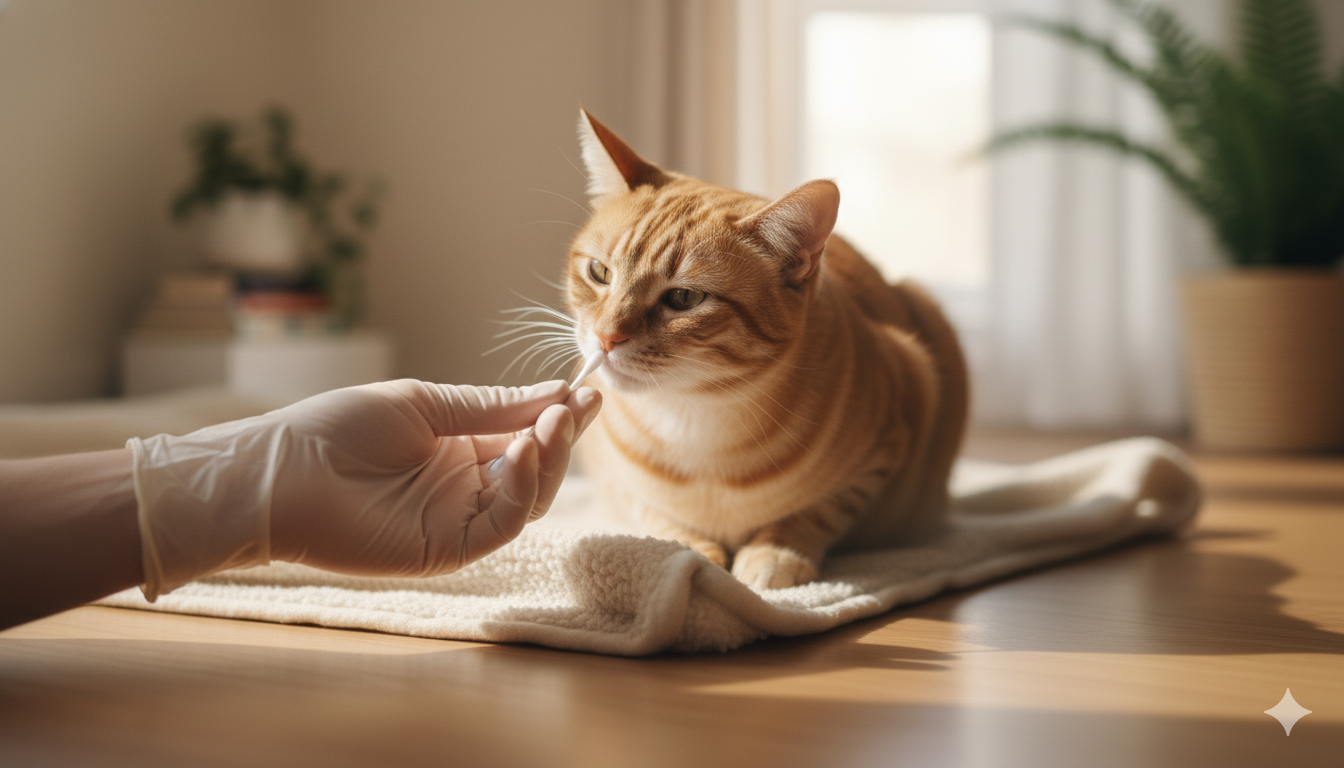
calm cat by window stress monitoring cortisol feline welfare
Key Findings
Plasma/serum cortisol is useful for acute stress but susceptible to artificial elevation from the stress of blood collection itself, reducing reliability
Evidence: iCatCare (Veterinary Record article)
Fecal glucocorticoid metabolites (fGCMs) non-invasively reflect integrated adrenal activity over the preceding 12-24 hours — suitable for chronic stress assessment
Evidence: iCatCare (Veterinary Record article)
Hair cortisol reflects cumulative cortisol over the hair growth period — a promising non-invasive long-term stress indicator; urine and saliva cortisol are also less invasive alternatives
Evidence: PubMed (Veterinary Record review); PetMD
Scientific Mechanism
When stress occurs, the cat's hypothalamic-pituitary-adrenal (HPA) axis activates, releasing cortisol from the adrenal cortex. Cortisol spreads systemically and accumulates in feces, urine, saliva, and hair. Each matrix reflects a different time window: blood captures immediate acute stress, feces reflects 12-24 hours, and hair captures chronic stress over weeks to months.
Research Information
- Journal
- Veterinary Record / iCatCare
- Published
- 2025
- Sample Size
- Expert review and multi-study compilation (iCatCare, PubMed)
- Institution
- International Cat Care (iCatCare); PubMed (Veterinary Record review)
Related News
Health
Landmark Study Reveals Striking Genetic Parallels Between Feline and Human Cancers
An international research team analyzed 493 feline tumor samples and identified striking genetic parallels between cat and human cancers. Results showed TP53 gene mutations occurred in 33% of feline tumors and 34% of human tumors, with particularly notable similarities in breast cancer.
Health
SDMA: The Early Biomarker That Detects Cat Kidney Disease Before Symptoms Appear
Chronic kidney disease (CKD) affects approximately 30% of cats aged 10 and older. While traditional serum creatinine only rises after 75% of kidney function is lost, the newer biomarker SDMA detects abnormalities from as little as 25% loss, enabling much earlier intervention.