Allergy vs Intolerance: The Basic Difference
While symptoms may appear similar, food allergy and intolerance have different root causes. Allergy involves an overactive immune response, while intolerance is a digestive problem. The distinction matters because treatment and outcomes differ significantly.
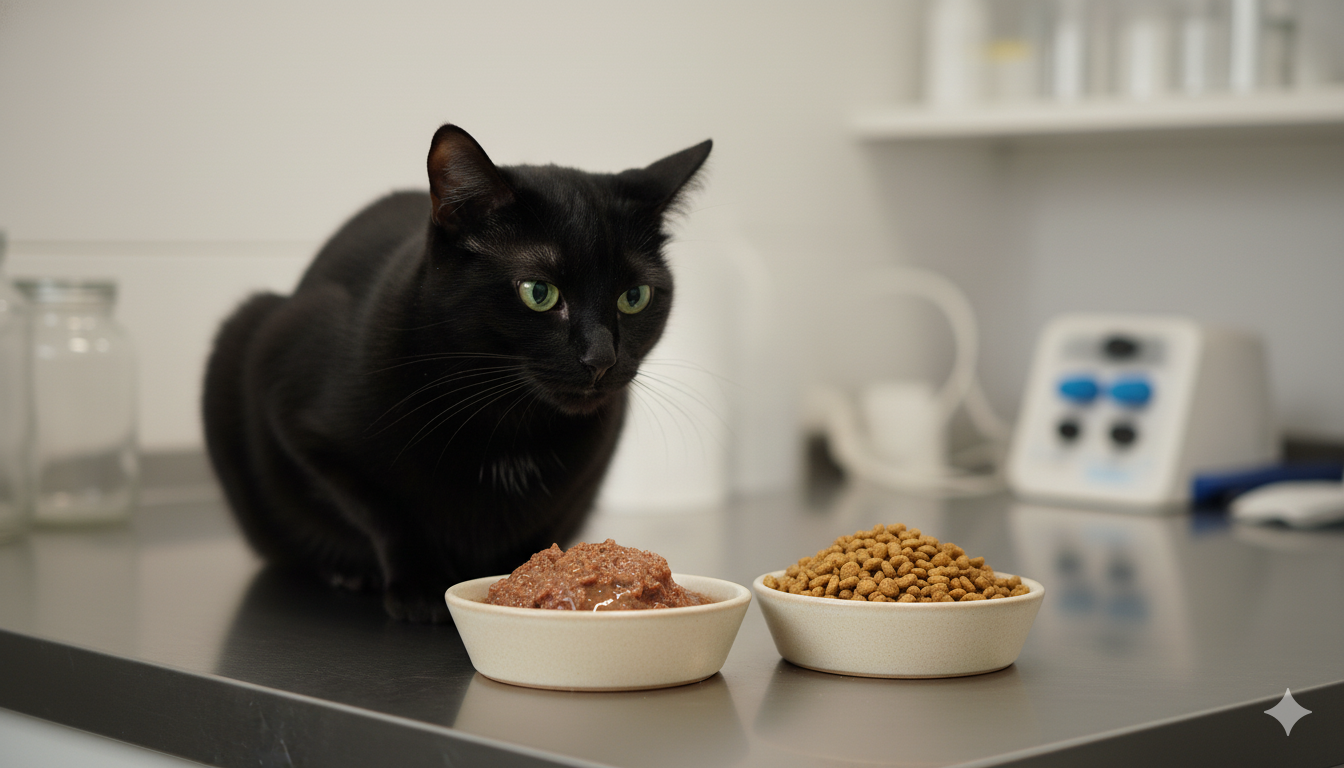
Comparison of immune response vs digestive response
1. Food Allergy
Definition and Mechanism
Food allergy occurs when the immune system mistakenly identifies a food component (usually protein) as a threat and overreacts. It involves IgE or T-cell mediated responses and can be triggered by tiny amounts of the allergen.
Food Allergy Symptoms
| Affected Area | Symptoms | Onset |
|---|---|---|
| Skin | Chronic itching, recurrent dermatitis, ear infections | Months (chronic) |
| GI tract | Chronic diarrhea/vomiting, abdominal discomfort | Weeks (chronic) |
| Systemic | Anaphylaxis (rare but severe) | Minutes (emergency) |
Common Cat Food Allergens
- Chicken, beef, fish — rank varies by study; consistently top 3 allergens due to high exposure frequency
- Dairy products
- Wheat/corn/soy — grain-based foods
2. Food Intolerance
Definition and Mechanism
Food intolerance is a digestive problem, not an immune issue. It occurs when the cat's digestive enzymes cannot adequately break down a component, or the intestines are particularly sensitive to it. Unlike allergy, small exposures may not trigger reactions.
Food Intolerance Symptoms
- Diarrhea is primary (vomiting less common)
- Occurs after every meal with that ingredient
- May tolerate small amounts
- No itching or skin symptoms
- May lead to malabsorption and nutrient deficiency
Common Intolerance Triggers
- Lactose — most cats are lactose intolerant
- High fat — difficult to digest, can trigger pancreatitis
- Grains (especially corn) — difficult to digest fiber
- Artificial additives/flavoring — irritating components
- Specific meat processing — salt, chemical preservatives
Allergy vs Intolerance Comparison
| Feature | Allergy | Intolerance |
|---|---|---|
| Cause | Immune overreaction | Digestive issue |
| Onset | After repeated exposure (weeks-months) | Immediate (every meal) |
| Main symptom | Itching, ear infection | Diarrhea, discomfort |
| Small amount reaction | Can trigger reaction | May not trigger |
| Treatment | Strict avoidance (lifelong) | Can manage with smaller amounts |
3. How to Conduct an Elimination Diet
What is an Elimination Diet?
An elimination diet is a diagnostic tool to identify problematic ingredients. Feed only novel protein and carbohydrate sources (ingredients the cat has never eaten) for 6–12 weeks while monitoring symptoms. If symptoms improve, reintroduce original ingredients one at a time to identify the culprit.
Implementation Steps
- Week 1-2: Consult vet; choose novel protein (duck, rabbit, venison) cat has never eaten
- Week 3-6: Feed ONLY that protein + simple carb. Check all treats, toothpaste, medications
- Week 7-12: Document symptom changes. Track diarrhea frequency, itching reduction, vomiting cessation
- Week 12+: If improved, reintroduce original ingredients ONE at a time (every 2 weeks)
- Final: If symptoms return, that ingredient is the culprit. Avoid it permanently
Elimination Diet Precautions
- ✓ Vet-prescribed: Use vet-formulated elimination diets (nutritionally complete)
- ✓ Family cooperation: All household members must not give unauthorized food
- ✓ Medication check: Verify supplements/medications contain no allergens
- ✓ Timeline adherence: Too short = misdiagnosis, too long = unnecessary restriction
- ✓ Documentation: Daily log of symptoms, stool, appetite → share with vet
Other Diagnostic Methods
Serum Allergy Testing
Blood tests measure IgE antibodies to specific food antigens. However, veterinary studies (including PMC5577833) evaluate feline food-specific IgE serum testing as having low reliability. IgE levels do not accurately predict actual food allergies in cats, so elimination diets are recommended as the first diagnostic step.
Intradermal Testing
Small amounts of allergens are injected into the skin to observe reactions. This is difficult to perform on cats and is less reliable for food allergies than blood tests.
Intestinal Biopsy
If diarrhea persists despite elimination diet changes, biopsy can rule out inflammatory bowel disease (IBD), bacterial overgrowth, or other causes.
Long-term Dietary Management After Diagnosis
- Confirmed allergy: Lifelong avoidance (watch for cross-reactivity)
- Confirmed intolerance: Limitation or avoidance (gradual reintroduction possible)
- Multiple allergies: Multiple avoidances → consult vet nutritionist
- Regular check-ups: Annual reassessment with vet (monitor nutritional status)
References
- AAFCO - Food Sensitivity and Allergy Definitions
- Journal of Feline Medicine and Surgery - Feline Food Reactions Study
If you suspect food-related digestive issues, check our diarrhea and nutrition guides, then consult your veterinarian.
🥗 Use Nutrition Planner →