Why Brushing Matters
Brushing does much more than just manage shedding. Regular brushing removes dead hair, promotes skin circulation, helps detect skin abnormalities early, prevents hairballs, and strengthens the bond with your cat. Long-haired breeds especially risk severe matting without brushing, which can lead to skin infections.
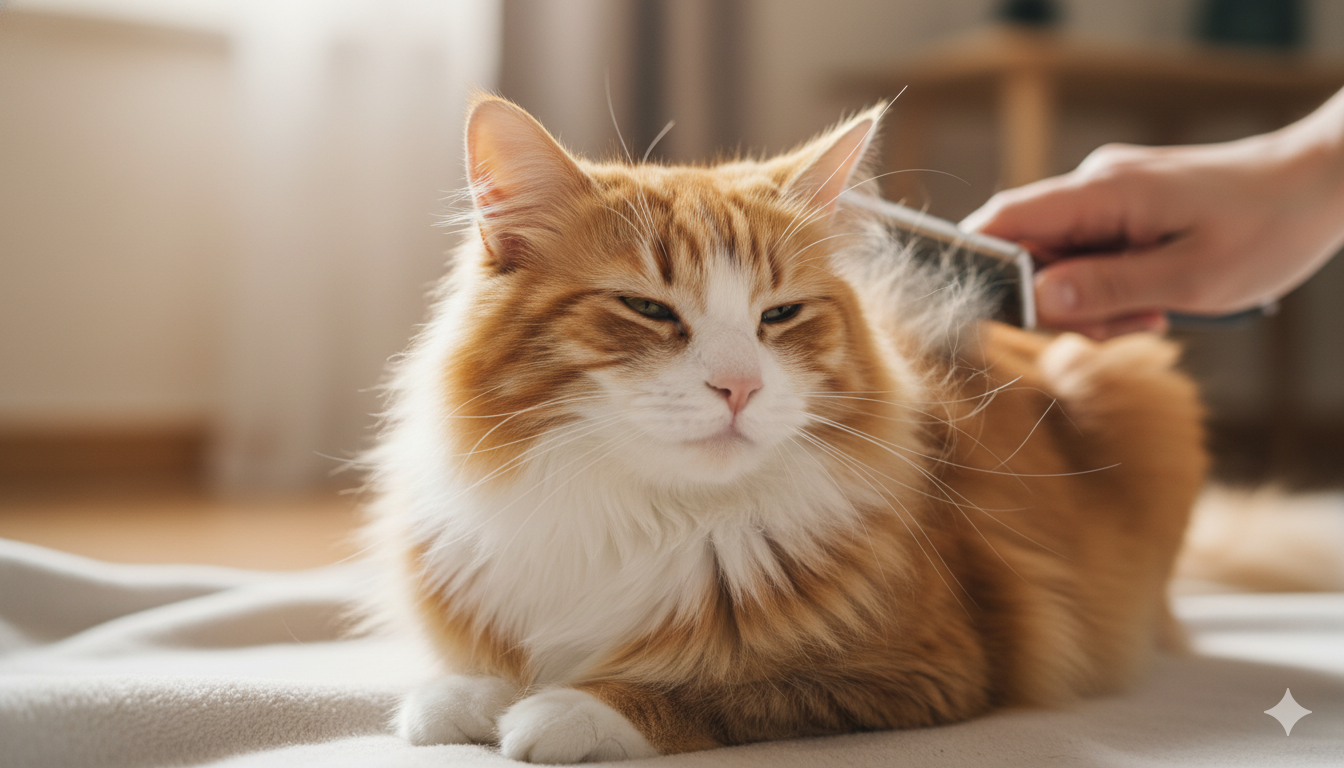
Cat Brushing Guide
Brush Types and How to Choose
| Brush Type | Suitable Coat | Main Use |
|---|---|---|
| Slicker brush | All coat types | Remove dead hair, prevent matting |
| Undercoat rake | Double coat, thick fur | Remove undercoat |
| Pin brush | Long-haired breeds | Detangle, smooth coat |
| Rubber brush | Short-haired breeds | Remove dead hair, massage |
| Furminator | Both short and long | Heavy undercoat removal |
Brushing Frequency by Coat Type
- Short-haired breeds (Korean Shorthair, Russian Blue, etc.): 1-2 times per week
- Semi-long breeds (Maine Coon, Birman, etc.): 2-3 times per week
- Long-haired breeds (Persian, Ragdoll, Norwegian Forest Cat, etc.): Daily or every other day
- Shedding season (spring/fall): Double frequency for all breeds
How to Brush Without Stressing Your Cat
- Start short: Begin with 1-2 minutes. Gradually increase as cat gets comfortable
- Start with preferred areas: Most cats enjoy head, neck, and back. Leave belly and legs for later
- Positive reinforcement: Pair brushing with treats or play to create positive association
- Let the cat stay where it is: Don't restrain; encourage voluntary participation
- Brush direction: Always brush in the direction of hair growth. Reverse brushing irritates skin
- If matting found: Do not cut with scissors — refer to professional groomer or veterinarian
Skin Abnormalities to Watch for During Brushing
- Circular hair loss or red patches → possible ringworm or allergy
- Black debris (flea dirt) → flea infestation
- Skin scales or scabs → dermatitis or external parasites
- Excessive oiliness or odor → possible yeast (Malassezia) infection
- Lumps or swelling → immediate veterinary examination required
Sources & References
- Cornell Feline Health Center - Cat Coat Care
- American Association of Feline Practitioners - Grooming Guidelines
- International Cat Care - Grooming Your Cat
⚠️ Consult a veterinarian if skin abnormalities are found.
Explore more cat care tips.
🧮 Use Age Calculator →