Why Cat Nail Care Matters
Indoor cats don't naturally wear down their nails as they would in the wild. Overgrown nails can pierce the paw pad, get caught on furniture and break, or injure people and other animals. Regular nail care is necessary for the safety of both the cat and the family.
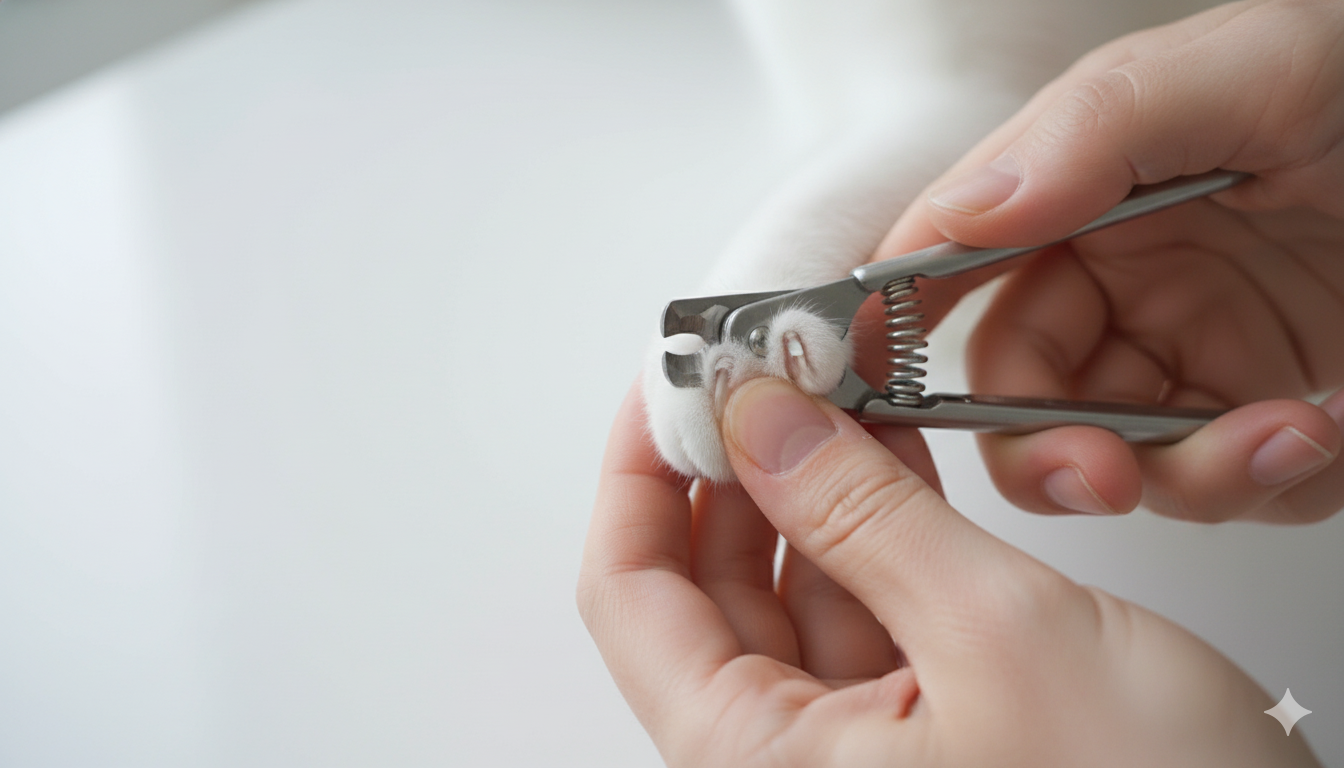
Cat Nail Care
How to Trim Cat Nails
- Step 1 - Prepare: Use cat-specific nail clippers or small human clippers. Never use regular scissors.
- Step 2 - Settle: Place the cat comfortably and hold one paw at a time. Do not restrain forcibly.
- Step 3 - Extend: Gently press the toe to extend the nail.
- Step 4 - Identify the quick: The pink area inside the nail. Cutting this causes bleeding.
- Step 5 - Trim 2-3mm from the quick: Remove only the sharp tip, leaving 2-3mm from the pink area.
- If you cut the quick: Apply styptic powder or flour to stop bleeding.
Nail Trimming Frequency
Most indoor cats need nail trimming every 2-4 weeks. Senior cats may grow nails more slowly but nails tend to thicken and curve, requiring more frequent checks.
Scratcher Selection & Placement Guide
Scratching is an instinctive behavior in cats. It removes the outer nail sheath, stretches toe muscles, and marks territory visually and with scent. Providing appropriate scratchers significantly reduces furniture damage.
| Type | Features | Best For |
|---|---|---|
| Vertical post | 60cm+ height, stable | Most cats |
| Horizontal pad | Used lying flat | Cats preferring flat surfaces |
| Angled | 45-degree angle | Cats preferring varied angles |
| Sisal fabric | Durable, great for scratching | Heavy scratchers |
| Cardboard | Affordable, easy to replace | Light scratchers |
- Place near frequently used spots (sleeping area, windowsill, etc.)
- If scratching furniture, place a scratcher directly beside that furniture
- Provide at least one scratcher per cat plus one extra
- Ensure scratchers are stable and do not wobble
Sources & References
- Cornell Feline Health Center - Feline Nail and Paw Health
- American Association of Feline Practitioners - Environmental Enrichment
- International Cat Care - Scratching Behavior
⚠️ Consult a veterinarian if nail abnormalities (severe curving, infection, etc.) are observed.
Explore more cat care tips.
🧮 Use Age Calculator →