Have you ever been jolted awake at 3 AM by the sound of thunderous paws sprinting across the floor or insistent meowing at your door? While many assume cats are nocturnal, they are actually "crepuscular," meaning they are most active at dawn and dusk. With the right environmental adjustments and routine changes, you can align your cat's energy levels with your own sleep schedule.
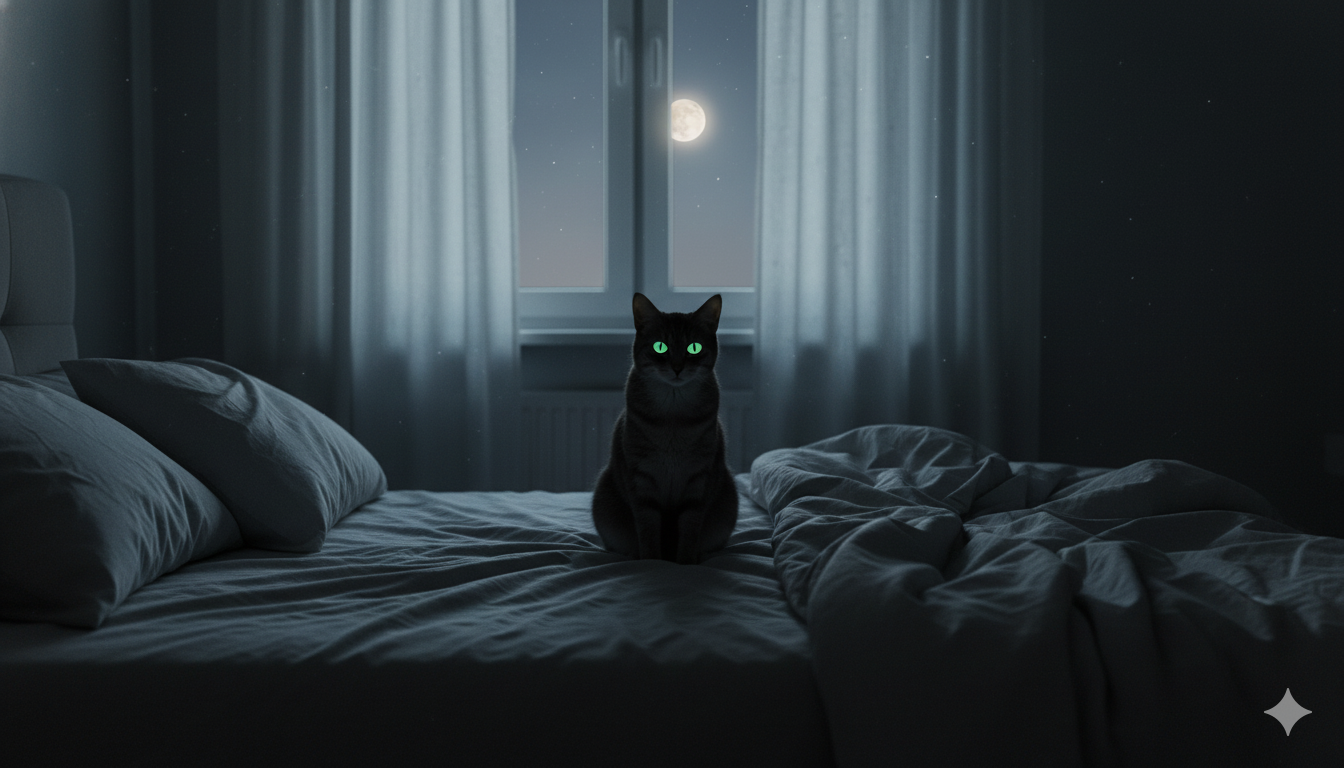
A cat awake and alert in a dimly lit room
Why Cats Are Active at Night
- Instinctual energy burst: Releasing energy accumulated during day-long naps, triggered by hunting instincts.
- Boredom and loneliness: A social request for attention or interaction after hours of solitude.
- Hunger: Due to their small stomachs, cats may feel genuinely hungry several hours after their last meal.
3-Step Strategy for Better Sleep
The key to syncing your cat's rhythm with yours is establishing a "Play-Eat-Sleep" routine.
| Step | Action |
|---|---|
| 1. Intense Hunting Play | 15-20 mins of vigorous play before bed |
| 2. Late Night Meal | High-protein meal after play |
| 3. Zero Interaction | Do not react or get up for attention |
Caution: When It's Medical
If a senior cat who was previously quiet suddenly starts vocalizing loudly at night, it could indicate hyperthyroidism or cognitive dysfunction syndrome (feline dementia). Restlessness due to pain can also cause nighttime activity. If behavioral changes don't help, consult your vet to rule out medical issues.
References
- International Cat Care - Night-time Activity in Cats
- Ohio State University - Indoor Pet Initiative: Feline Lifestyle
Wondering how age affects your cat's behavior? Check our Age Calculator.
🧮 Use Age Calculator →