What is Crude Protein?
Crude protein is calculated based on the nitrogen content in food using a fixed coefficient (6.25), not actual protein quality or digestibility. This means a 40% crude protein food might not provide the same nutritional benefit as another 40% crude protein product.
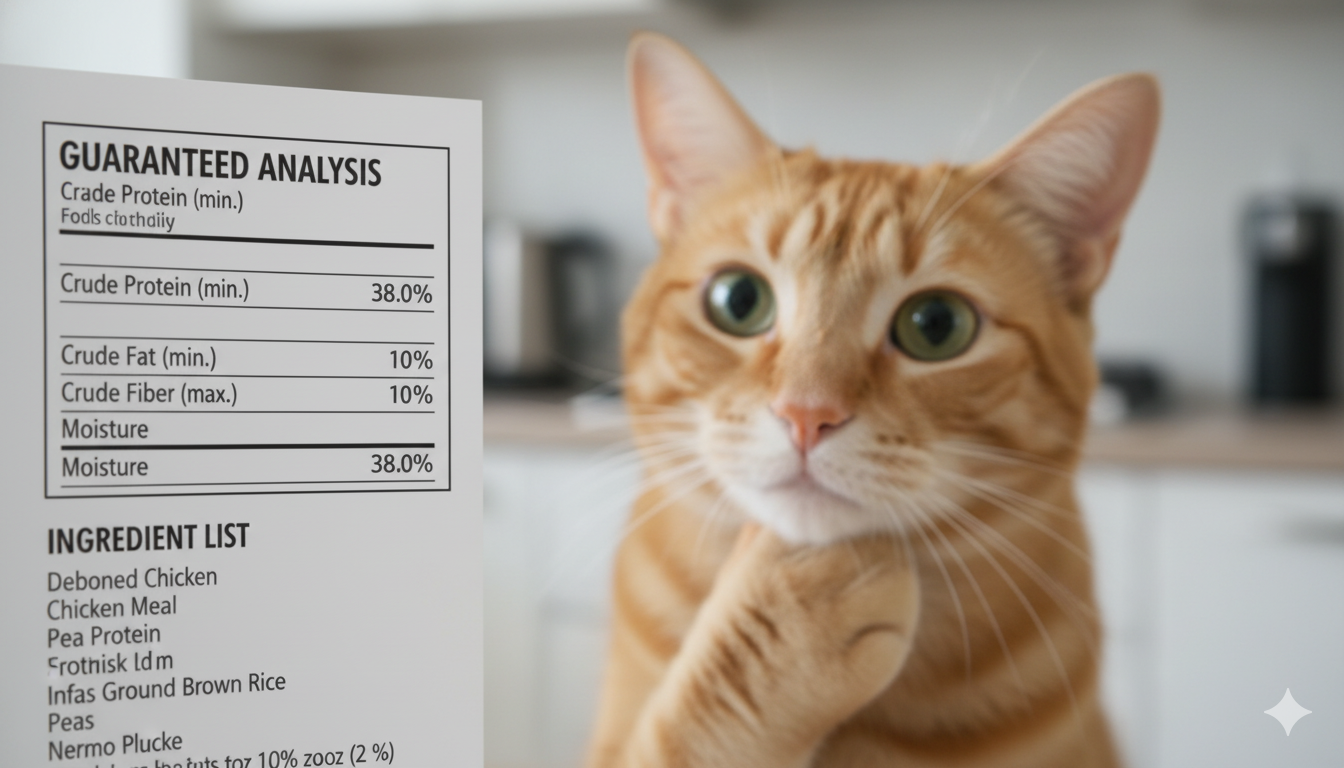
Cat Food Ingredient Analysis
What Does Crude Protein % Measure?
- Nitrogen content × 6.25 = Estimated protein amount
- Does not differentiate between animal and plant proteins
- Does not reflect protein quality, digestibility, or amino acid profile
High Protein = Good Food? Myth vs Reality
While cats are obligate carnivores with higher protein needs than dogs, the marketing obsession with "high protein" often oversimplifies nutrition. More protein doesn't always equal better health.
Protein Requirements by Life Stage (AAFCO Standards)
| Life Stage | Min Crude Protein |
|---|---|
| Kitten | 26% |
| Lactating Queen | 30% |
| Adult | 18% |
| Senior | 18% (Consult your vet) |
Adult cats require only 18% minimum protein per AAFCO standards. A 40% protein food is not inherently superior to a 25% protein food.
What Cats Really Need: Protein Quality
3 Things More Important Than High Protein Percentage
- 1️⃣ Digestibility: How much of the protein your cat actually absorbs (70% vs 90% makes a huge difference)
- 2️⃣ Amino Acid Profile: Especially taurine (essential for cats, critical for heart and eye health)
- 3️⃣ Protein Source Quality: Animal-based vs grain/by-product dependent
Judging Protein Quality by Ingredient Order
| Ingredient Type | Examples | Assessment |
|---|---|---|
| High-Quality Animal Protein | Fresh chicken, chicken meal, fresh salmon | ✅ Excellent (high digestibility, complete amino acids) |
| Plant Protein | Potato protein, pea flour, corn gluten meal | ⚠️ Caution (lower digestibility, incomplete amino acids) |
| By-products | Meat by-product meal, bone meal, feather meal | ❌ Avoid (low quality/unclear source) |
Conclusion: Look Beyond the Crude Protein Number
- Don't judge by crude protein % alone → Check full nutrition facts and ingredients
- Choose protein level appropriate for your cat's age and health (consult vet)
- Verify first ingredient is quality animal protein
- Check for taurine content (essential amino acid)
Sources & References
- AAFCO - Cat Food Nutrient Profiles
- Cornell Feline Health Center - Nutrition Guidelines
- American Veterinary Medical Association (AVMA)
This article is for informational purposes only. Please consult with your veterinarian regarding your cat's nutritional needs.