Why Pet Food Labels Are Confusing
Pet food labeling uses technical terminology, marketing language, and meets only minimum legal standards. But learning the basics helps you identify truly nutritious options.
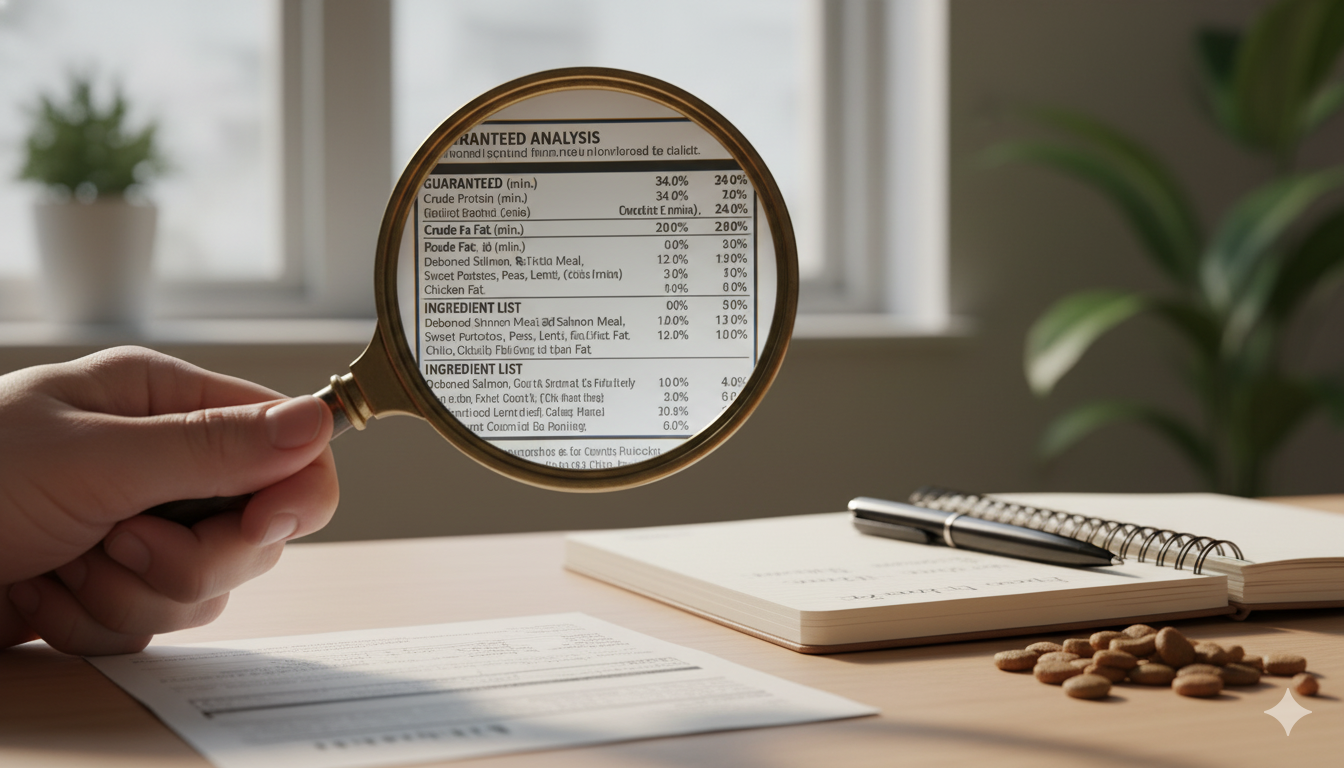
Pet Food Label Analysis
Step 1: Check the First 5 Ingredients
Ingredients are listed by weight in descending order. The first 5 ingredients comprise the bulk of the food. What's listed first matters most.
Decoding Ingredient Names
| Ingredient Name | What It Means | Rating |
|---|---|---|
| Chicken or "Fresh Chicken" | Whole animal muscle + moisture | ✅ Excellent |
| Chicken Meal | Dehydrated chicken (low moisture) | ✅ Excellent |
| Poultry Meal | Mixed poultry source unclear | ⚠️ Caution |
| Meat Meal | Unclear meat source | ⚠️ Caution |
| Animal By-Products | Low-value parts | ❌ Avoid |
| Potato Starch | Filler carb | ⚠️ Acceptable as filler |
Understanding the "Water Weight Trick"
"Fresh chicken" is 70% water, which inflates its ranking in the ingredients list. The same protein amount as chicken meal ranks lower because it has no water weight. Check the first 5 ingredients together to get the real picture.
Step 2: Spot Hidden Additives
Chemical Additives to Avoid
| Additive | Other Names | Concern Level | Purpose |
|---|---|---|---|
| BHA (Butylated Hydroxyanisole) | E320 | High | Preservative |
| BHT (Butylated Hydroxytoluene) | E321 | High | Preservative |
| TBHQ | tert-Butylhydroquinone | Med-High | Preservative |
| Meat by-product meal | unnamed meat meal | Medium | Cost-effective protein |
| Corn Syrup, Sugar | Sugars | Medium | Flavor enhancer |
| Artificial Flavors | Flavor enhancers | Medium | Attraction |
Many premium brands now use natural preservatives like mixed tocopherols or rosemary extract. Scan labels to ensure these artificial additives are absent.
Step 3: Read the Guaranteed Analysis
Below the ingredient list, the Guaranteed Analysis shows minimum/maximum percentages of key nutrients. This is your nutritional snapshot.
- Crude Protein minimum (≥18% for adults)
- Crude Fat minimum (≥9% for adults)
- Crude Fiber maximum (lower is better, <5% ideal)
- Moisture (dry food <10%, wet food 75-80%)
- Taurine explicitly stated (must be present)
Step 4: Check AAFCO Certification
Look for "Complete and Balanced" statement, which means the food meets AAFCO nutritional standards for your cat's life stage (Kitten, Adult, Senior).
Step 5: Calculate the Real Cost
Price per kilogram is misleading. Calculate daily feeding cost based on your cat's actual nutritional needs.
Calculate Daily Food Cost
Example: 5kg adult cat, maintenance 1. Daily calorie need: 70 × (5^0.75) × 1.0 ≈ 250 kcal 2. Food caloric density: 3.8 kcal/gram (check package) 3. Daily food needed: 250 ÷ 3.8 ≈ 66g 4. Monthly cost: (66g × 30) ÷ 1,000kg × per-kg price
Real Examples: Comparing 3 Products
| Item | Budget | Mid | Premium |
|---|---|---|---|
| First Ingredient | Corn meal | Chicken meal | Fresh chicken |
| Protein | 22% | 28% | 35% |
| Animal content | 20% | 70% | 85% |
| 1kg price | ₩10,000 | ₩25,000 | ₩45,000 |
| Daily (5kg cat) | 80g | 65g | 55g |
| Monthly cost | ₩24,000 | ₩48,750 | ₩74,250 |
Budget food costs less per kilogram but requires larger portions due to lower nutritional density. Premium food may be overpriced. The sweet spot is often mid-range with good ingredient quality.
Checklist: How to Choose Good Cat Food
- ☑ First ingredient: named meat/fish (chicken, salmon, beef)
- ☑ Top 5 ingredients: 80%+ animal-based proteins
- ☑ No BHA, BHT, TBHQ, artificial colors/flavors
- ☑ AAFCO "Complete and Balanced" statement
- ☑ Taurine explicitly stated
- ☑ Crude Protein ≥18% (adults), protein is primary
- ☑ Reasonable price-to-value ratio
- ☑ Appropriate for your cat's health needs
Important: Changing Foods Safely
When switching foods, do it gradually over 7-10 days to avoid digestive upset. Mix increasing amounts of new food with old food.
Sources & References
- AAFCO - Pet Food Standards and Guidelines
- Cornell Feline Health Center - Nutrition & Diet
- FDA Pet Food Labeling Requirements
This guide is for informational purposes. For cats with health conditions, consult your veterinarian for dietary recommendations.