What is Cat Spaying & Neutering?
Spaying and neutering are surgical procedures that remove or disable a cat's reproductive organs. The procedure is called "spaying" for females and "neutering" or "castration" for males. This guide does not advocate for or against the procedure — it aims to provide objective veterinary information for cat owners to reference when consulting with their vet.
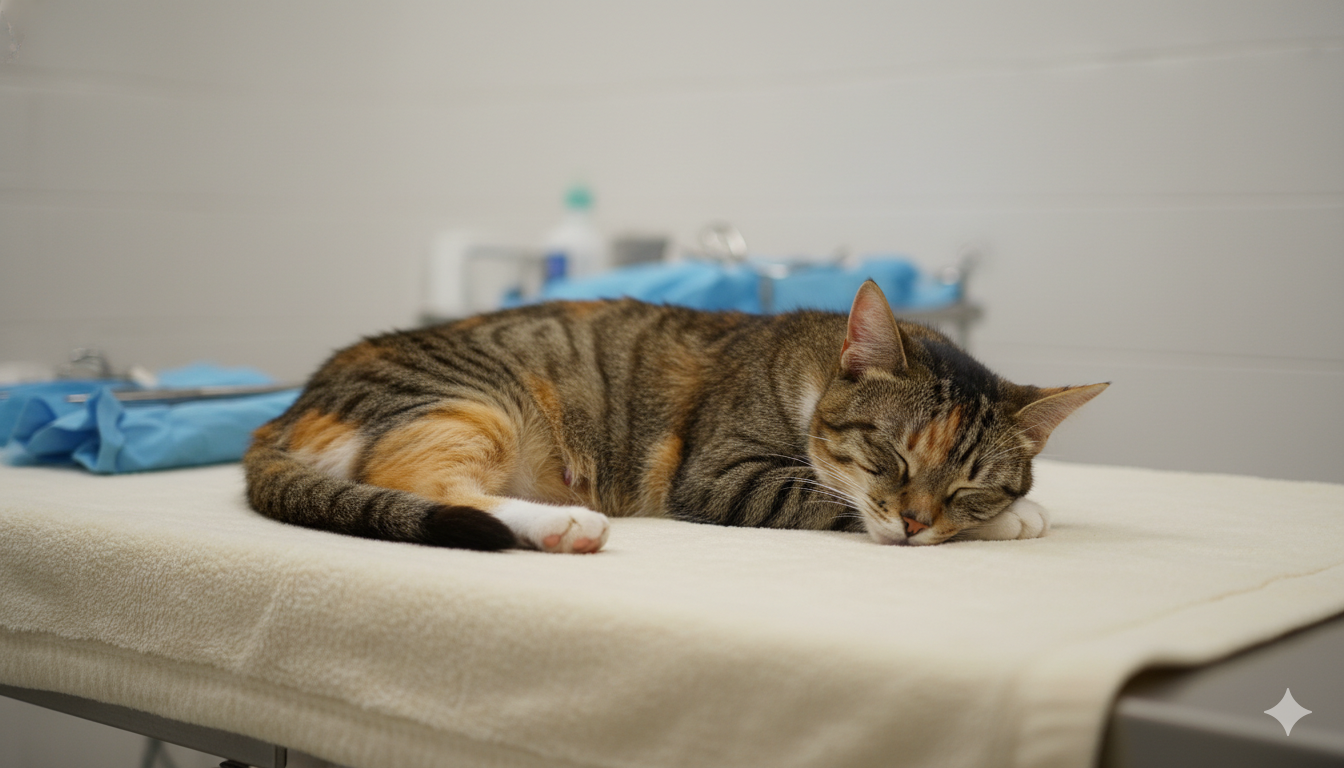
Cat Spaying & Neutering
Types of Procedures
Female: Ovariohysterectomy (OHE)
The most common female sterilization procedure. Both the ovaries and uterus are surgically removed. Performed under general anesthesia via abdominal incision, typically taking 30–60 minutes. In some countries, ovariectomy (OE) — removal of ovaries only while preserving the uterus — is also practiced.
Male: Orchiectomy (Castration)
Both testicles are removed through a scrotal incision. Performed under general anesthesia, typically taking 15–30 minutes — shorter than the female procedure. The incision is often small enough to not require sutures.
Common Timing of the Procedure
The optimal timing varies by individual health status, breed, and owner circumstances. Always consult your veterinarian. The table below reflects commonly referenced timeframes.
| Category | Common Timeframe | Notes |
|---|---|---|
| Female | Before first heat (4-6 months) | Varies by breed/individual |
| Male | 4-6 months old | Consider individual conditions |
| Adult (unaltered) | After vet health check | Recommend pre-anesthesia bloodwork |
General Pre-Surgical Preparation
- Fasting 8–12 hours before surgery (water restrictions per vet's instructions)
- Pre-operative physical exam and bloodwork (to assess anesthesia risk)
- Confirm vaccination and deworming status
- Screen for pre-existing respiratory or cardiac conditions
Procedure Overview
The general sequence is: sedation → general anesthesia induction → clipping and sterilizing the surgical site → surgery → suturing and anesthesia recovery. Cats are monitored until awake and typically discharged the same day or the next day.
Recovery Period
| Period | Female | Male |
|---|---|---|
| Day of surgery | Rest, warmth needed; decreased appetite common | Drowsiness, unsteadiness may occur |
| Days 1-3 | Limit activity, protect suture site | Mild discomfort, prevent licking |
| Days 7-10 | Suture removal if needed, vet check | Most return to normal activity |
| After day 14 | Full recovery for most | Fully recovered |
Possible Physical & Behavioral Changes After Surgery
Hormonal changes after surgery can lead to certain physical and behavioral changes. The following are changes reported in veterinary literature — they do not occur uniformly in every cat.
- Reduced basal metabolic rate → tendency for weight gain (dietary adjustment may be needed)
- Female: estrous cycle ceases, heat-related vocalizations stop
- Male: urine spraying may decrease (not guaranteed in all cats)
- Male: roaming behavior may decrease
- Personality changes are generally minimal, but individual variation exists
General Risks Associated with the Procedure
All surgeries carry risk. While spaying and neutering are considered relatively safe procedures, the following risks exist. Individual risk assessment should be made by a licensed veterinarian.
- Complications related to general anesthesia (rare)
- Surgical site infection
- Internal bleeding (very rare)
- Wound dehiscence (incision opening)
- Increased anesthesia risk in cats with pre-existing conditions
Post-Operative Warning Signs to Watch For
- Refusal to eat or drink for more than 24 hours
- Severe swelling, redness, or discharge at the incision site
- Persistent vomiting or diarrhea
- Extreme lethargy or unresponsiveness
- Difficulty breathing
Sources & References
- American Veterinary Medical Association (AVMA) - Spaying and Neutering
- Cornell Feline Health Center - Reproductive Issues
- International Cat Care - Neutering
This article is for informational purposes only. Decisions regarding spaying or neutering should always be made in consultation with a licensed veterinarian familiar with your cat's individual health profile.