What's the Difference Between Wet and Dry Food?
Cat food is broadly divided into wet food (cans, pouches) and dry food (kibble). The two differ significantly in moisture content, nutritional profile, and storage. This guide does not advocate for either option — it presents objective information to help cat owners have informed conversations with their veterinarian.
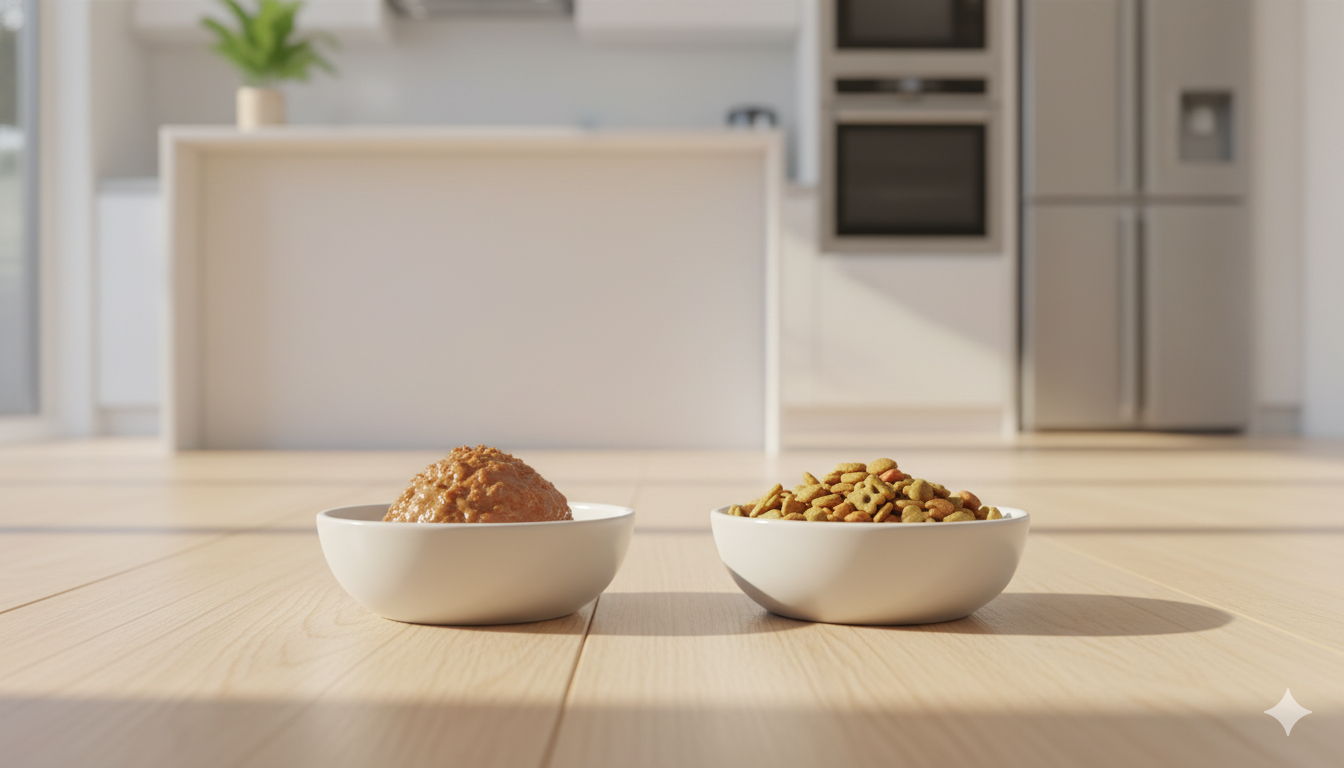
Cat Wet vs Dry Food
| Item | Dry Food | Wet Food |
|---|---|---|
| Moisture | Approx. 6–10% | Approx. 70–80% |
| Calorie Density | High | Low |
| Protein Source | Animal + Grain mix | Mainly animal |
| Storage | Weeks to months | Refrigerated 1–2 days |
| Cost per Day | Relatively low | Relatively high |
Dry Food (Kibble)
Dry food is produced by extruding ingredients under high heat and pressure into pellet form. The low moisture content allows for room-temperature storage and a long shelf life.
Advantages
- Convenient storage and long shelf life
- Well-suited for free-feeding
- High caloric density — less volume needed per feeding
- Generally more cost-effective than wet food
- Some reports of mechanical dental cleaning effect from chewing (cannot replace professional dental care)
Disadvantages & Considerations
- Low moisture may contribute to dehydration in cats that drink little water
- Often higher in carbohydrates than wet food
- Insufficient hydration may be a concern for cats with urinary tract issues
- Some nutrient loss possible during high-heat processing
Wet Food (Canned / Pouch)
Wet food is available in cans or pouches with a moisture content of 70–80%. It is preserved through high-temperature sterilization and requires no refrigeration before opening.
Advantages
- High moisture content contributes to daily water intake
- May be beneficial when hydration is important (e.g., urinary or kidney health)
- Generally lower in carbohydrates
- Higher palatability — useful for cats with reduced appetite
- Many products have a high proportion of animal-based protein
Disadvantages & Considerations
- Must be refrigerated and consumed within 1–2 days after opening
- Higher cost per calorie compared to dry food
- Not suitable for free-feeding (spoils quickly at room temperature)
- Some cats may refuse wet food due to texture or temperature sensitivity
Mixed Feeding
Some owners and veterinarians use a combination of wet and dry food. While this can incorporate the benefits of both formats, it complicates total calorie tracking — careful portion management is important to prevent weight gain. Specific ratios should be discussed with a veterinarian based on the individual cat's condition and health goals.
Factors to Consider When Choosing
| Situation | Notes |
|---|---|
| Insufficient water intake | Consider wet food or improving hydration environment |
| History of stones / kidney disease | Hydration is key — must consult with a vet |
| Weight management needed | Caloric density and portion control are crucial |
| Kittens | Check for AAFCO growth stage nutritional standards |
| Seniors | Consider dental health and kidney function |
| Poor appetite | Consider highly palatable wet food |
Common Checklist for Any Cat Food
- AAFCO nutritional adequacy statement (complete and balanced)
- Life stage appropriateness (Kitten / Adult / Senior / All Life Stages)
- First ingredient listed is an animal protein source
- Check for artificial preservatives, colorings, or flavorings
Sources & References
- AAFCO - Cat Food Nutrient Profiles
- Cornell Feline Health Center - Feeding Your Cat
- American Veterinary Medical Association (AVMA) - Pet Nutrition
This article is for informational purposes only. The most suitable food format for your cat should be determined in consultation with a licensed veterinarian.